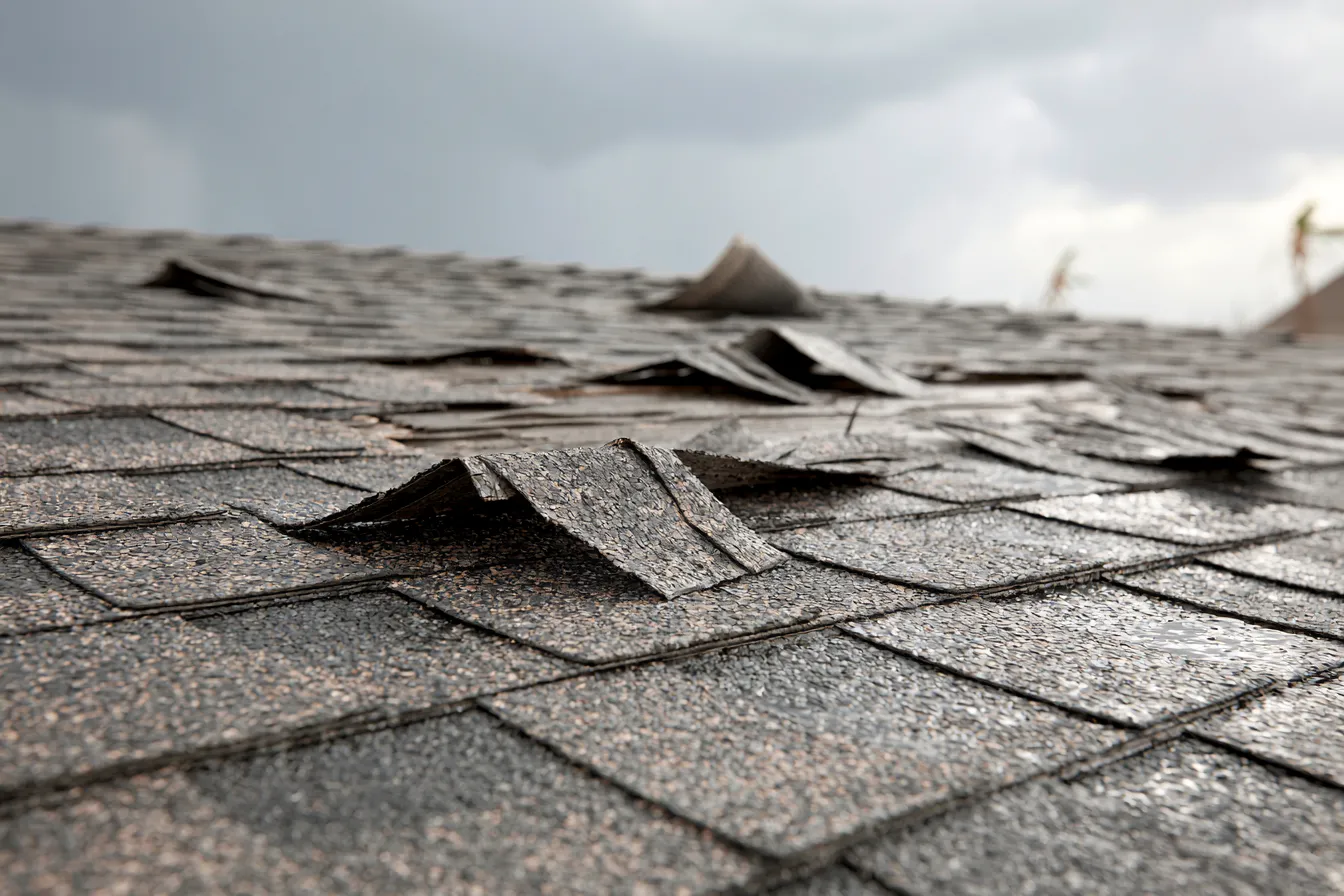
A claim gets approved, the check turns up, and it's thousands under the estimate. The natural conclusion is that somebody's trying it on. Usually nobody is. On most replacement-cost policies the settlement is built to arrive in two parts, and nothing much tells you that until you're already holding the first one.
What the first check actually is
That first payment is the actual cash value: what the old roof was worth the day the storm hit, once the age comes off it. A twelve-year-old covering isn't worth what a new one costs, and the check says so.
The rest, the difference between that number and the full replacement cost, is held back. It's called recoverable depreciation, it's yours, and it just comes with a condition attached. If the terms themselves are new, the claim walkthrough covers what each one means.
- Actual cash value: what the old roof is worth today. That's the payment that shows up first.
- Recoverable depreciation: the rest of it, released once the work's finished and invoiced.
- Your deductible: it comes off the total, and on wind and hail it's often a percentage of the insured value rather than a flat figure.
Why it's built this way
The condition is there so replacement cost only ever pays for roofs that actually get replaced. Without it, a settlement could be pocketed on a roof nobody touches, and everybody's premiums would end up carrying that. It isn't aimed at you.
There's a consequence worth knowing, though. A roof that never gets done usually means the held-back portion never gets claimed at all, and that's the larger half. People do take the first check and stop there.
Bridging the gap
Between that first check and a finished roof there's a real shortfall, and it shows up before the second payment does. The routes people here use to cover it have a page of their own; the short version runs like this.
- Savings, where the deductible and the gap are manageable together.
- A payment schedule with the roofer, written down before anyone starts.
- Lender financing, where the terms are the lender's and they're shown up front.
- Staging the work, if the roof allows it; most don't.
What to settle before work starts
The estimate settles the things that otherwise turn into an argument halfway through. It puts the full scope behind one figure. It says what happens if the decking underneath turns out to be soft. And it spells out who's paying whom and when, which is the part that matters most when a settlement arrives in two pieces.
Then there's the invoice. That's the document that releases the second payment, so finishing the roof without one can leave that money sitting where nobody claims it.
Ask Murphy Roofing Company for it, and a local roofer writes that estimate. That's what gives you something to hold the settlement against. What a roof in Murphy runs is the other half of that picture.