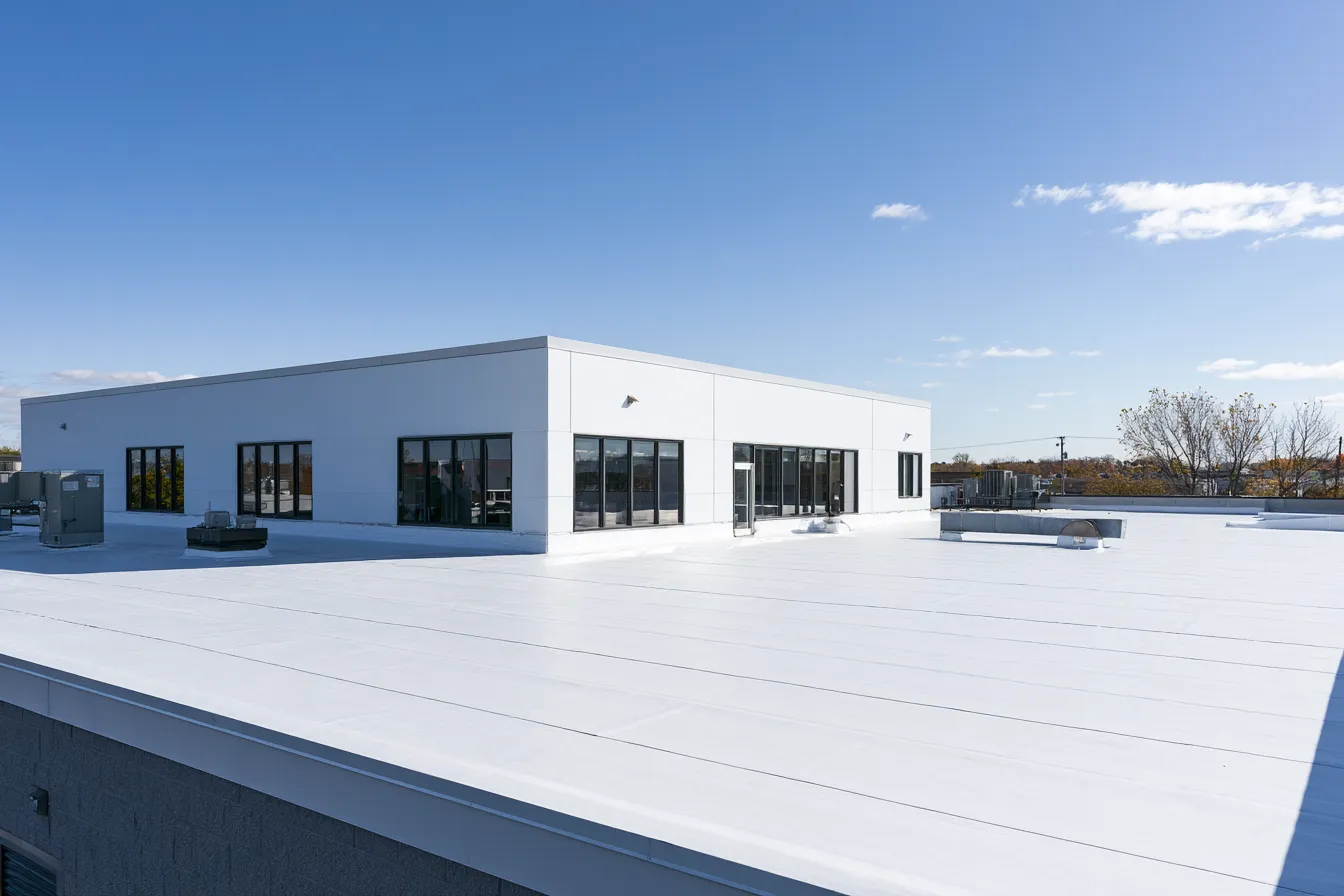
Flat Roof Repair in Murphy, TX
Most flat roof repair in Murphy happens on one low-slope section over a porch, a sunroom or a patio cover.
Yours still holds water two days after the rain. Our roofers flood one area at a time until the mark inside answers.
Fixing a flat roof in Murphy
You have a ring on the sunroom ceiling, or a drip that only turns up in a long soaking rain. From the ground there is no telling whether the low-slope section has given out or whether it is draining the slow way it was built to.
Our roofers settle that one first. Say which part of the house it's over, and you're not deciding anything on the strength of that visit.
Flat sections here are built with a slight fall and sealed with a membrane, so draining slowly is the design. Where they give out is the joint, taking runoff off a much bigger pitched surface at a speed it was never sized for, and the gutters downstream belong to the same job.
Left alone, a section that has lost its fall holds water longer every year, and a seam letting in a cupful a storm wets the decking underneath. By then the repair takes in the deck, the insulation, and often the ceiling below.
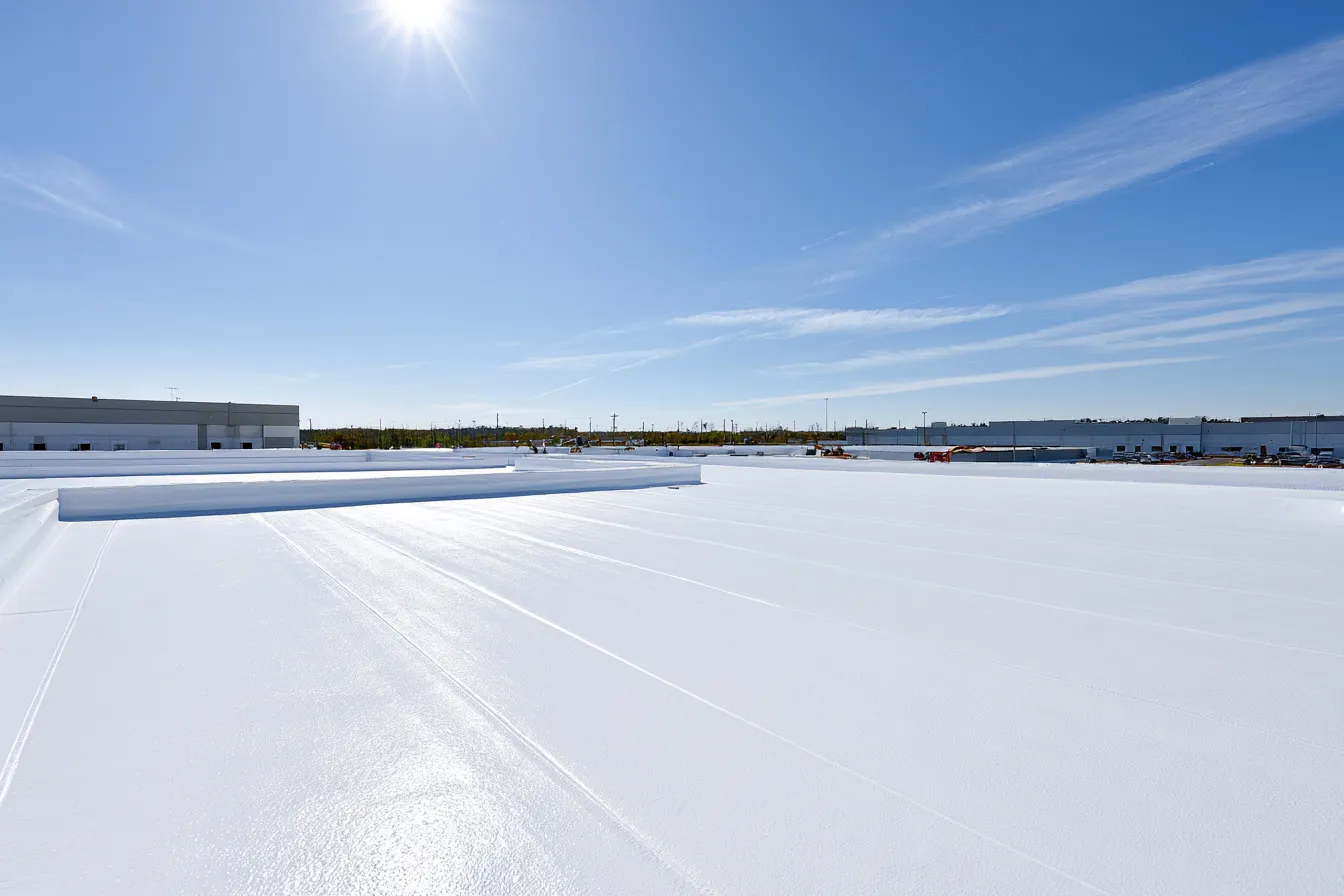
The low section measured separately
A patio cover or a sunroom addition drains nothing like the pitched roof it's bolted to, so it's treated as its own roof from the start. That's also why a roofer will walk it before saying anything about the main roof: the two are often at completely different stages of their lives.
The joint checked before the field
Where the low run meets the pitched roof or a wall is the busiest detail on the structure, so it's inspected ahead of the open membrane. On these sections that one joint accounts for most of what goes wrong.
Standing water traced to a cause
Water that stays put is either fall the section has lost or an outlet that's blocked, and the write-up says which one you're dealing with. Those are two different jobs carrying two different numbers, so the answer comes before anything is ordered.
The membrane identified on site
Modified bitumen, a welded single-ply sheet and a coated surface all fail differently and all take different repairs. Your roofer names which one is up there before pricing a fix, because a patch built for the wrong system holds a season at best.
Pictures of what's up there
Nobody sees a low-slope section from the yard, which is half the reason these runs get left until they drip. Our roofers photograph what they found on your section and hand the pictures over with the findings, so you're looking at what they were looking at.
Both coverages named on the estimate
Our roofers put their own workmanship coverage on the estimate alongside the manufacturer's coverage on the material, each carrying its own length. Those limits live in the documents themselves, so they reach you with the price instead of turning up later.
What standing water on a Murphy roof means
Most of what a low-slope section will tell you comes down to water that hasn't left yet, and to the joint where it meets the rest of the house. If you can see the section from an upstairs window, you can check the first few of these yourself before the next long rain.
Water still up there a day later
Standing water means the section has lost its fall, or an outlet is blocked and holding it back. A puddle that's gone by the next afternoon is the roof draining the slow way it's meant to, so the timing tells you more than the puddle does.
A stain where the addition meets the house
The joint with the pitched roof or the wall is where these sections give out first. An interior mark near that line points straight at it, and it's the first place your roofer goes.
A seam lifting at the edge
Membrane sheets are joined along seams, and seams are where they let go. An edge that's already lifted is already open; the next rain is what makes it show.
Blisters across the surface
Blisters are trapped moisture expanding in the heat and pushing the sheet up off what it was bonded to. They don't all leak, though each one marks a spot where the bond has already gone.
A patio cover that drips inside
Patio covers and sunroom additions are the most common low-slope runs on houses here, and a drip under one usually starts up at the joint. The deck underneath is what you're protecting by getting to it while it's still dry.
The surface gone chalky or bare
A membrane that's lost its coating or its gravel is near the end of its service life. Patches on a surface like that hold where they're stuck and open up beside them.
Finding a leak on a Murphy flat roof
Locating the entry point is most of the work on a low-slope section, because water runs between the membrane and the deck before it shows up anywhere you can see it. The order runs from the likeliest failure to the least, and how long you wait on an answer depends on how many suspect areas the section has: an open seam at the joint is short work, and three suspect areas take three rounds of testing.
Where it shows up inside
A ceiling mark shows where the water finally gave up, and it can travel a long way along the deck before that. Your roofer works uphill from that mark, because the opening is almost always somewhere above it.
The joint, then the details
Your roofer works the transition into the pitched roof before touching the open membrane, then the outlets, the curbs and anything penetrating the surface. That's the order these roofs fail in, so it's the order they're searched in.
Water on the suspect areas
Your roofer floods one area at a time until the mark inside responds, which proves the entry point instead of assuming it. Nothing is repaired on a hunch here, because a patch in the wrong place costs you the next storm.
The detail that failed
The failed seam, upstand or flashing is rebuilt, and the surface around it is put back to match the system that's already there. Sealant spread over a failed seam holds for a season and then opens again, so it doesn't count as a fix.
The variables behind a Murphy flat roof price
On a low-slope repair, most of what moves the price is how much of the section has to be proven before anyone can fix it. One open seam at the joint is a small job, and it's the common one. A section where the water could be coming in at three places carries the hours it takes to test them one at a time. And because these runs are often a different age from the roof they join, the question under the price is whether you're spending on a section with years left or postponing a replacement that's already due. Your roofer says which of those two you've got, and you get the reasoning with it.
Soft decking under the membrane changes the job once it's uncovered, and that's the usual reason a repair number moves after work starts. Low-slope work prices off what the tracing turns up, so a figure offered before that is filler.
Flat roof questions Murphy owners ask
Have a Murphy flat roof traced
The porch, the sunroom, the run over the back patio: say which one it is and whether the water clears or sits. Your roofer starts at the joint and tests outward until the entry point shows itself.