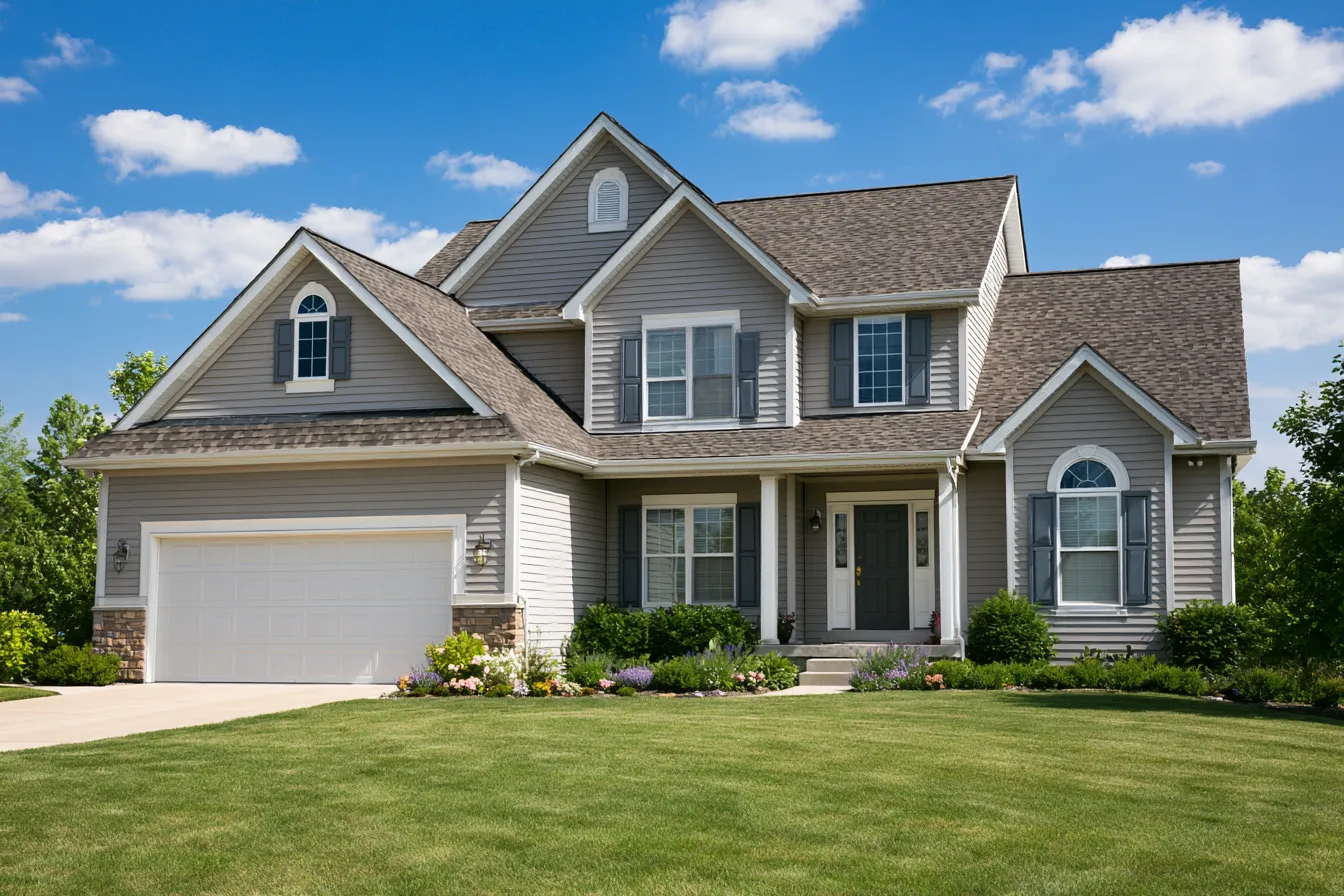
Roof Replacement in Murphy, TX
Replacing a roof in Murphy is usually a hail decision, and it's rarely made on a roof that looks old from the street.
You're at the point where the whole roof is the question. Our roofers measure yours, and nothing gets ordered until you say yes.
A Murphy roof replacement, what is included
Most of the replacement calls Murphy Roofing Company takes are on houses that still look new, and it's hail that finished those roofs, not age. What lands in your hands is a full breakdown of the job, part by part, before you've agreed to anything.
A replacement isn't priced like a repair because it isn't one. Everything above the decking comes off, the wood is bare and visible for the only time in that roof's life, and then the assembly goes back in order: membrane at the eaves and in the valleys, underlayment across the field, new step flashing at the walls and the chimney, fresh boots on the pipes, and the shingles last. Old flashing put back under new shingles is the easiest line to leave out of a cheap bid, and it's the reason some new roofs leak before they're four.

The old roof comes off whole
Every layer above the decking comes off, including the slopes that still look sound from the driveway. That's the only stage where anyone can tell you what shape the wood is in, and it's most of what separates a tear-off from a patch.
The per-sheet price comes first
Soft or wet sheets only show themselves once the roof is open, so the per-sheet price is set before the first shingle moves. If sheets do come out, you're shown each one and the count is what changes.
Membrane where water works hardest
The valleys and the eaves take a self-adhering membrane underneath everything else, because that's where water runs heaviest and where wind pushes it back uphill. Underlayment then goes over the whole field on top of that.
New metal at every detail
Step flashing, valley metal and pipe boots all go on new with the roof. They give out well ahead of the shingles, and putting the old ones back is how a young roof starts marking a ceiling.
Ventilation balanced while it's open
Intake at the soffits and exhaust at the ridge are counted against the attic they serve, since exhaust with no intake cooks a new roof from underneath. This is the one moment when correcting it costs almost nothing.
Two documents, two parties
The manufacturer stands behind the material and our roofers stand behind the install, which are separate promises carrying separate lengths. Both get named on your estimate, so you're not working out which one applies at the moment you need it.
When a Murphy roof is past repairing
These are the things that move a Murphy roof out of repair territory, and most of them turn up on houses barely twenty years old. Any one of them is worth a proper look, and two of them together usually settle it.
Soft bruises you can't see from the yard
Hail leaves tender spots in the mat long before it leaves holes, and they turn up under a hand run across the shingle, photographed where they sit. A slope full of them is spent even though the roof still reads as whole from the street.
Marks on more than one slope
Hail rarely picks a single face of a house, so when several elevations come back marked, the roof took that storm as one piece. Repairing two slopes out of four leaves the other two running on the same clock.
A second claim on the same shingles
One hail claim is ordinary here. A second one on the same roof means it's been taking hits since the year it went on, and each repair after that buys less time than the one before it.
Bare asphalt showing in patches
Granules are the sunscreen on an asphalt shingle, so where the black mat is showing in broad areas the shingle has stopped protecting itself. Grit in the gutters is ordinary wear and this is a long way past that.
Decking that moves underfoot
Wood that flexes when somebody walks it has been damp long enough to lose its grip on a nail. Those sheets have to come out during the tear-off, and nothing laid over them will hold.
You're listing the house this year
A roof with visible damage becomes a line in every inspection report and a number in every offer. Settling it beforehand usually costs you less than the credit a buyer asks for.
Tear-off to cleanup on a Murphy replacement
The order is what protects the house: nothing comes off until the ground below it is covered, and nothing new goes down until the bare deck has been walked. Weather picks the day, so the date follows a dry stretch in the forecast.
Every slope, then underneath
Our roofer measures the roof face by face and, as needed, checks the decking from the attic side where it can be reached. You end up holding photographs of your own roof and a price built off measured footage.
Beds, drives and glass
Ground protection is part of what you say yes to: tarps under the eaves, the dumpster off the lawn, the state the yard comes back in. Everything that leaves a roof lands somewhere, and where it lands is decided beforehand.
Down to bare wood
Every layer above the decking comes off, and the walk across the bare deck marks any sheet that's gone soft. You see those sheets before they're replaced, and the count is what you're paying against.
Membrane, flashing, shingles
The assembly goes back in order, with new metal at every wall and valley and fresh boots on the pipes. The magnet pass over drives and beds at the end is worth seeing named in the estimate, because tear-off nails outlast everything else about the job.
What decides a Murphy replacement price
Almost everyone wants one number, and a replacement does not have one until someone has been up there. Size, pitch, how many layers come off and what the decking looks like underneath all move it. The cost page lays out what drives the figure and what a Murphy roof runs.
What people here ask before replacing
Have a Murphy roof looked at properly
Measuring comes before pricing, whole roof first. Say what's turned up and roughly when you first noticed it, and your roofer takes it from the roof itself.