
Gutters in Murphy, TX
If your gutters came over the front in the last hard rain, that run is telling you something about its size or its fall.
It isn't always the gutter's fault. Our roofers measure the roof draining into it before calling it a morning's work or a new run.
What gutter work covers in Murphy
When a gutter comes over the front in a hard rain, the question is whether it wants clearing or whether the run itself has quit. Those two answers do not cost anything like the same money.
Gutter sizing here is built around short hard bursts of rain. A five-inch run under a big steep slope can be spotless and still come over the front, so a roofer measures the roof above the gutter first.
North Texas clay swells when it is wet and shrinks when it dries, so a downspout emptying at the corner of the slab works against the house every time it rains.
Pricing runs by the foot, so the length of a run does most of the work in the number, and what sits behind the metal moves the rest. None of it's agreed on the spot; the numbers go home with you and they're yours for as long as you want them.
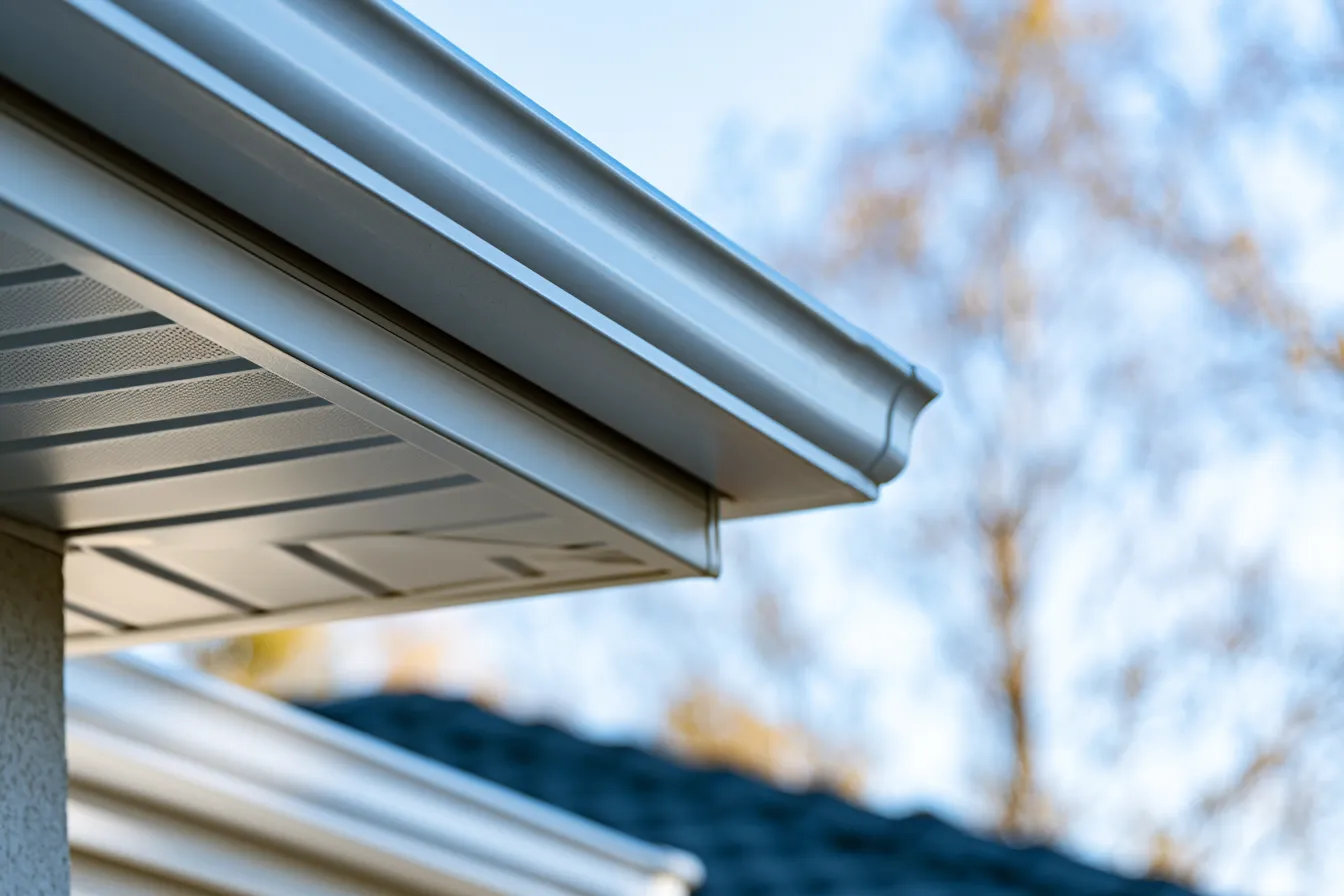
Roof area measured to each run
How much roof drains into one length of gutter is what sets the trough size and the outlet count. A house's front and back often come out different, and that's normal rather than a mistake.
Seamless runs formed on site
Your roofer rolls the trough out of a coil to the exact length of the fascia, so the only joints sit at corners and outlets. Every joint's a place a drip can start later, and that's why replacement work is done this way.
Downspouts counted on site
A wide trough with one small outlet still backs up at the low corner in a downpour. You settle the outlet size, how many, and where they drop before anything is ordered.
The board behind it checked
New gutter hung on soft fascia pulls loose early, so the roofer looks the wood over while the old run's down. Rot's called out and priced before new metal covers it.
Where the water is put down
Discharge belongs well out from the house, past the beds and clear of the slab. Extensions and downspout landings are part of the job here, and on these lots they're doing as much work as the trough is.
Guards priced on their own line
Screens and mesh mean fewer trips up the ladder, though they don't take the ladder out of the picture. They sit on their own line, so dropping them doesn't send the whole quote back for a redo.
Signs Murphy gutters have stopped working
Gutter trouble shows up from the ground, usually on the paint and in the beds before anybody's looking at the metal itself. Two or three of these at once is a drainage problem and not a cleaning one.
Dark stripes down the front face
Water's been running over the lip instead of through the trough, pulling dirt down the outside as it goes. You can see the stripes from the driveway, and they're a record of overflow that happened months back.
A sheet of water over the front edge
In a hard rain the trough's taking more than it can carry, or something's stopping it at the outlet. Which of those it is decides whether you're looking at a morning on a ladder or a new run.
Water still sitting in the trough
Days after the rain quits, standing water means the fall's off or the outlet's plugged. Water's heavy, and a run holding it sags a little further every season.
Paint bubbling on the board behind
The fascia's been wetting from the back, which is what happens when water runs behind the gutter instead of into it. Paint's the last layer to give up, so by the time it bubbles the wood's been soaking a while.
Drips at a corner or a joint
Sealant wears out long before the metal it holds together does, and corners are where it lets go first. A drip there lands in the same spot every storm, and that's usually a bed, a walkway or a step.
A channel dug in the bed below
Water coming off the same stretch of eave every storm digs its own line, and from there it's working down toward the footing. Mud splashed up the brick is the same story at eye level.
Sizing and hanging gutters in Murphy
Sizing decides whether a run keeps up with a hard rain; fall decides whether it drains or holds water. Both are settled before any metal's ordered, and the hanging itself doesn't take long next to a roof job, unless the fascia turns out soft once the old run's down.
The roof above each run
Your roofer works out how much roof drains into each length before picking a trough size. Getting that number wrong is how a brand new gutter ends up overflowing in its first spring.
The old run and the board
The old gutter comes down and your roofer looks over the fascia behind it while it's exposed. That's when soft wood comes out, because reaching it later means taking the new gutter off again.
Fall toward the outlets
Your roofer chalks the slope before a single bracket goes in, with a high point mid-run on the long sides so neither end finishes low. A run hung dead level looks fine from the yard and it'll hold water for years.
The finished line with a hose
Water goes through the whole run and your roofer watches where it comes out. Fall, overflow and every joint show themselves under water, so that test happens before anybody calls the job done.
Questions that come up on gutter jobs
Have Murphy gutters looked at
A run that's spilling, sagging or dripping at a corner usually means the roof edge above it wants looking at too. Name the side of the house that is giving trouble, and your roofer tells you what's wrong and what putting it right involves.