
Roof Repair in Murphy, TX
Roof repair in Murphy usually starts with a stain or a lifted shingle you can see and can't place.
The ceiling stain won't tell you where it started. Our roofers trace it to the opening, then size the repair to what failed.
Repairing a Murphy roof, step by step
Most people can't tell how bad a roof is from the ground. Roofs fail in an order: grit in the gutters, a lifted shingle, a stain that grows, water near a light fitting, then a ceiling that goes soft. A free look at it settles which stage yours is at.
By the time anything reaches a ceiling it has been running a while. Water travels along the deck before it drops, so the stain sits downhill of the opening, and sealing under the mark patches a piece of roof that was never broken.
On most houses here the failure is at a detail: a pipe boot gone brittle in the sun, step flashing worked loose at a wall, a valley carrying more water than it was built for. Those three cover most of what leaks.
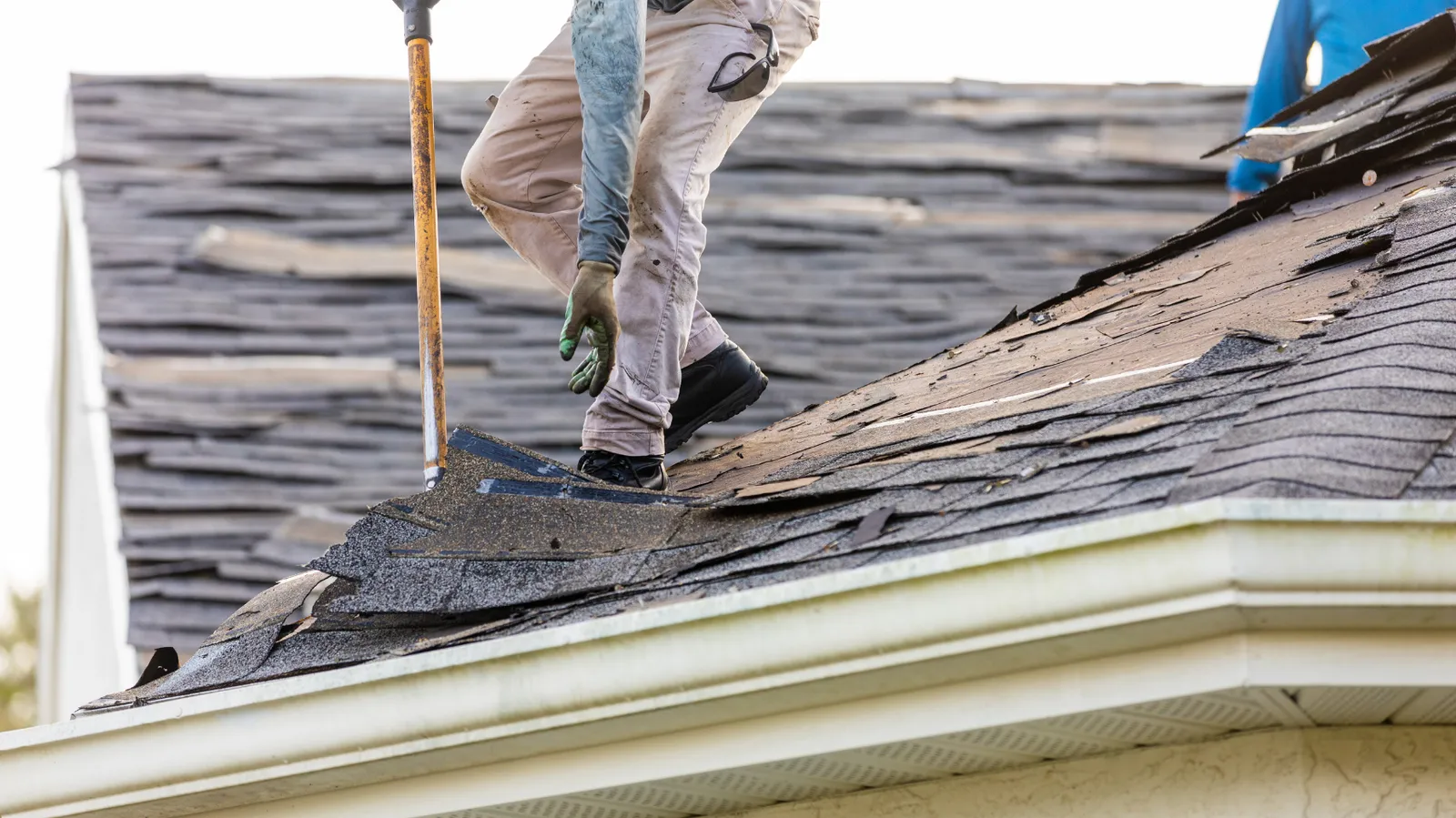
Where the water's actually getting in
Interior marks sit downhill of the failure, so the search starts at the details above the stain and works back up the slope. Fixing the mark instead of the opening is how a repair fails twice.
The deck read from the attic side
Sheathing tells you how long it's been wet, and that isn't a question a surface patch can answer. If the wood's gone soft it's part of the job, whether or not it was part of the plan, and it gets its own line, agreed with you before anyone does it.
Boots, valleys and step flashing
These give out years before the field of a roof does. On most repairs around here one of the three is the whole story, and our roofers price it as a detail job rather than a slope job.
The shingle match settled up front
Weathered asphalt never matches new stock exactly, and a patch on a sunny slope sits brighter than the field for a season or two. Where it's going to show, you'll hear it going in.
The repair sized to what failed
One bad detail and a slope that's finished are different jobs carrying very different numbers. The estimate says which one you've got, so it isn't a judgment call at the time.
Two separate warranty lengths
Our roofers' workmanship terms cover how the repair went on and the manufacturer's cover the material that went into it. Both sit on the estimate by name with their own lengths, so neither gets folded into the other.
What a failing Murphy roof shows first
These run roughly in the order a roof gives way in, from the first thing you'd spot to the point where repairing stops being the cheaper answer. Where you sit on the list matters a lot more than any single symptom does.
First: grit in the gutters
That's the shingles shedding their surface, and wear isn't a fault yet. Nothing's leaking and nothing needs doing today, but the clock has started.
Then: a lifted or missing shingle
Usually wind, and one or two of them is a small job. A scattering across different slopes is a sign the seal strips have let go generally, which is a different conversation.
Then: a stain that grows after rain
Water's arriving now, and this isn't left over from something older. If the edge creeps outward every time it rains, the opening's still open.
Then: water near a light or a fan
Water tracks along a wire run and reaches fittings before it ever reaches drywall. Kill that circuit at the breaker first. Until it's off, this isn't a roof question.
Late: a ceiling that sags or feels soft
Drywall holding that much water has been fed for a while, and the decking above it usually has too. Wood's part of the job at that point, and the wet area only ever grows.
Past it: the same roof, new spots
A third failure somewhere new is the roof telling you it's finished. Each repair after that buys about a season, and that's where replacing quietly becomes the cheaper call.
Tracing a leak on a Murphy roof
Finding where the water's crossing the line is most of the work, and it's the part a cheap repair skips. This is how our roofers prove the entry point instead of guessing at it.
Where it shows inside
Which room, which part of the ceiling, how long it's been going on, and a photo while the mark's still wet. A dry stain a week later says a lot less than a wet one does.
Back up the slope
From the attic where there's access, then from the roof itself, following the run back to where water's getting past. The mark indoors is the end of that run. The start of it is uphill.
What has to come apart
What failed, how much has to be lifted to reach it, and whether any decking's coming with it, all of it settled with you before anything's agreed. If opening it up turns up something nobody could see from below, that gets its own line and your say-so before the work continues.
The detail, then the covering
The failed detail gets rebuilt and the shingles go back over it so water runs past instead of into it. What comes off the roof and what's hauled away sits on the same page as the price.
The variables behind a Murphy repair price
Most of what you're paying for on a repair is finding the fault, not fixing it. So it's easier to think in three sizes than in a price. A small one is a single detail, a boot or a length of flashing, and cheap to fix once somebody knows that's what it is. A mid-sized one takes in a whole valley or a run of step flashing, so more comes off to reach it and more goes back. A deck-involved one is the step up: once the wood underneath has been wet long enough to replace, it isn't a surface job anymore, and nobody can price it from the ground because nobody can see it yet.
Whichever of the three it turns out to be, the scope's written down before anything's agreed. If the deck turns out to be wet once the covering's off, that's priced and agreed on its own before it's done, so the bill holds no line you haven't already seen.

What people ask about roof repairs
A leaking Murphy roof should be seen now
A stain that's grown since the last rain is further along than one that hasn't, and that difference decides most of the job. Our roofers trace it back up the slope to the opening, then name the failure and size the repair to it.